What Do Orangutans Look Like??
 Rachel Davis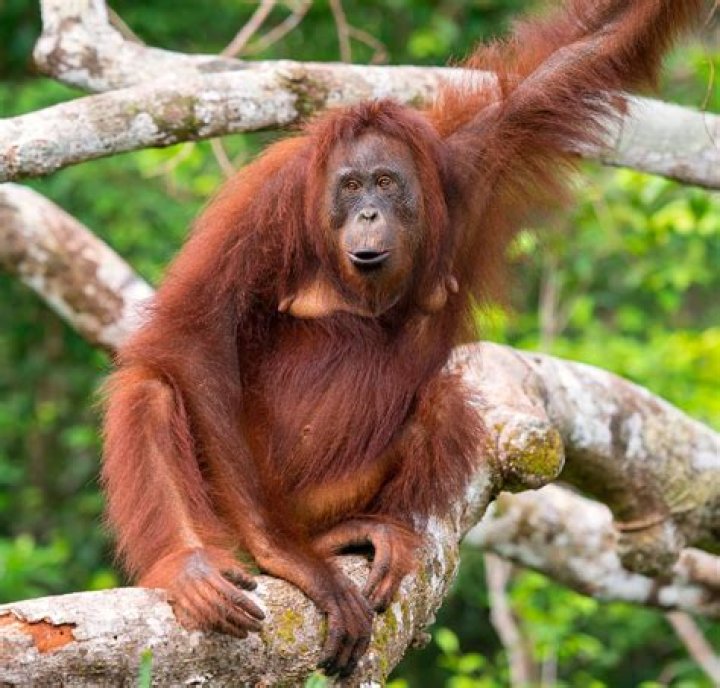
Orangutans are the world’s largest semi-terrestrial tree-dwelling mammals. These species of apes are social animals, especially females. They practically live on trees eating fruits, leaves, tree barks, insects, and meat on rare occasions. Male orangutans weigh between 50-90 kgs and females around 30-50 kgs.
Silky Terrier Dog Breed Playing Aro... Silky Terrier Dog Breed Playing AroundTheir height ranges between 1.25 to 1.5 meters (4.1-5 ft) male and around 1 meter (3.3 ft) females. Orangutans are found in the rainforests of the Southeast Asian islands of Sumatra and Borneo. Orangutans are seven folds stronger than humans.
What Orangutans Look Like??
The flowing orange hair, long arms reaching their ankles, short legs, thick neck, big flappy cheek pads(males), large and flexible body are specific features defining an Orangutan. Their arms are way longer than their legs and support while swinging and moving from one tree to another. Orangutans have highly flexible and mobile joints especially pelvic joints, letting them bend at any angle. The dark brown and pale to reddish-orange appearing orangutans have long, unkempt, thin hair covering their grey bodies. The baby orangutans have a pink body at birth that later transforms into brown and then greys gradually.
They have long and curved toes that help them grasp onto branches and travel. Thumbs and big toes are small to avoid hurdles while swinging between trees. Their features are adapted for climbing and swinging. Their toes and fingers have nails that help them open, scrape, clean, and scratch.
They have distinguishing facial features. Both males and females have hanging throat sacs that grow with age. The special cheek pads in the males are made of an accumulation of fibrous tissues. This feature makes the males visually attractive to female mates. They have powerful jaws adapted for eating fibrous food, and they also carry large objects in their mouths while swinging and climbing. Their lips help them detect food textures and also exaggerate facial features while communicating.